
 English
Views: 0 Author: Site Editor Publish Time: 2026-09-20 Origin: Site

The global construction sector is actively pivoting toward net-zero emissions. Sustainable building materials are no longer merely an architectural trend. They are a strict regulatory necessity. Autoclaved Aerated Concrete has rapidly emerged as a top material choice for commercial and residential developers. It offers an exceptional balance of lightweight structural support and superior thermal insulation.
While the material itself boasts impressive engineering qualities, sourcing it from the wrong supplier can quickly turn a profitable project into a logistical nightmare. Substandard manufacturing leads to structural inconsistencies. Poor shipping protocols inevitably result in massive breakage rates and costly project delays. For B2B buyers, procurement managers, and construction contractors, conducting rigorous due diligence is absolutely non-negotiable.
In this comprehensive guide, we will walk you through the exact technical, operational, and logistical checklist you must verify before signing a contract with any manufacturer. This ensures your supply chain remains robust and your building foundations stay secure.
Recent market analyses reveal a significant shift in global construction procurement. Driven by stringent carbon emission targets and rising energy costs, builders are aggressively phasing out traditional clay bricks. Modern developers require materials that actively contribute to LEED or BREEAM green building certifications. This regulatory pressure has skyrocketed the demand for high-performance autoclaved lightweight concrete.
Procurement teams are no longer just looking at the price per cubic meter. They are evaluating the entire lifecycle carbon footprint of the masonry units. Suppliers who utilize sustainable raw materials and energy-efficient curing processes are dominating the supply chain. Understanding this macro-level shift is crucial. It dictates why stringent technical verification is now the industry standard for any large-scale development.
Verify Technical Specs: Always confirm the compressive strength, density, and dimensional accuracy to ensure structural integrity.
Check Certifications: A reliable manufacturer must hold international quality certifications like ISO 9001 and CE marking.
Assess Production Scalability: Ensure the supplier possesses automated machinery capable of meeting strict project deadlines.
Evaluate Packaging Logistics: Proper palletizing and heavy-duty shrink-wrapping are crucial to prevent high breakage rates.
Prioritize After-Sales Support: Partner with suppliers offering technical installation guidance and transparent defect policies.
Verifying physical properties is the most critical step in supplier due diligence. Do not rely on glossy marketing brochures. Explicitly request certified third-party laboratory test reports. You need hard data confirming the materials meet your exact structural requirements.
There is a strict inverse relationship between the density of aerated concrete and its thermal insulation capabilities. Lower density provides better insulation but yields lower structural strength. Higher density offers greater load-bearing capacity at the cost of some thermal efficiency. You must match the specific grade to your project blueprints.
AAC Grade | Dry Density in kg/m³ | Compressive Strength in MPa | Primary Application |
|---|---|---|---|
B4 / A3.5 | 400 - 500 | ≥ 3.5 | Non-load-bearing internal partition walls. |
B5 / A5.0 | 500 - 600 | ≥ 5.0 | External walls with moderate load requirements. |
B6 / A7.5 | 600 - 650 | ≥ 7.5 | Heavy load-bearing structural applications. |
For instance, an AAC wall block sourced for a high-rise infill project typically requires a dry density of 500 kg/m³ to balance weight reduction and acoustic performance.
Precision in manufacturing directly impacts on-site labor costs. Imagine a masonry crew forced to apply a 10mm thick mortar joint just to compensate for unevenly cut materials. Labor and material costs would skyrocket. Demand strict dimensional tolerances. Premium units feature standard dimensions of 600mm in length, with heights ranging from 200mm to 300mm, and maintain a strict cutting tolerance of ±1.5mm. This high dimensional accuracy allows contractors to utilize thin-bed polymer mortar applied at just 2mm to 3mm thick. This precise fit eliminates thermal bridging and significantly decreases plastering time on the job site.
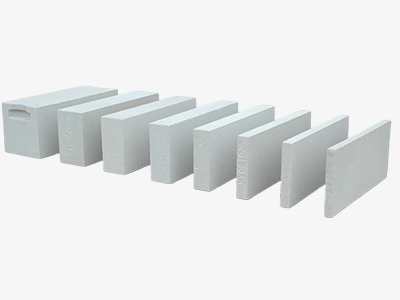
The consistency of the final product is entirely dictated by the factory infrastructure. Evaluating a supplier setup provides invaluable insight into their ability to deliver uniform quality across multi-container bulk orders.
The core of this material exceptional strength lies in its specialized curing phase. After the initial mixing and rising, the units must be cured in an autoclave. This massive steel pressure chamber operates under high pressure and saturated steam reaching temperatures around 190°C to 200°C. Factories equipped with imported automated autoclaves produce autoclaved aerated concrete blocks with highly consistent internal structures. Suppliers relying on outdated manual curing chambers often output batches with uneven moisture distribution. This inevitably leads to shrinkage cracks post-installation.
The chemical reaction generating the signature porous structure depends heavily on raw material purity. Inquire deeply about the sourcing of silica sand, high-grade cement, quicklime, and aluminum powder. The aluminum powder acts as the primary expansion agent. If the mixture is not precisely calibrated using automated batching plants, the resulting pore structure will be erratic. Consistent quality ensures every single unit behaves identically under structural stress.
Modern procurement teams prioritize regulatory compliance and environmental reporting over hunting for the lowest price tag. With tightening seismic safety codes across North America and Europe, sourcing non-certified construction materials frequently leads to catastrophic project shutdowns.
A credible factory operates under stringent documented quality management systems. Request up-to-date documentation for ISO 9001 and ISO 14001. If you are importing into the European Economic Area, CE marking is mandatory to prove compliance with EU safety requirements. For North American markets, compliance with ASTM C1693 serves as a non-negotiable engineering benchmark.
Beyond broad international standards, materials must perfectly align with the specific destination building codes. Confirm if the products have been independently tested for local fire-rating requirements. Many commercial projects require a 4-hour fire resistance rating for specific wall thicknesses. Requesting past case studies from successful regional projects is a highly practical way to verify this compliance.
Large-scale construction operates on unforgiving schedules. Supply chain bottlenecks result in severe financial penalties for contractors. Factory capacity must be a primary concern during your vetting process.
Before signing a master contract, critically evaluate a factory daily and monthly output capacity. A supplier might easily produce high-quality samples. But if their maximum monthly output is capped at 10,000 cubic meters and your project demands 30,000 cubic meters quickly, bottlenecks are mathematically inevitable. Request a detailed breakdown of their active production lines.
Global supply chains constantly fluctuate based on seasonal demands and sudden raw material shortages. Ask targeted questions regarding peak season lead times. Inquire about mechanical contingency plans. If a main wire-cutting machine requires unexpected maintenance, does the factory possess backup equipment? Reliable suppliers provide transparent lead time estimates ranging from 15 to 30 days.
When sourcing internationally, logistics present the most significant variable in total procurement costs. The cellular structure makes this material highly advantageous for lightweight construction. However, this exact physical characteristic renders the edges incredibly vulnerable to mechanical damage during ocean transit.
Open a container at a busy port only to find collapsed pallets. This is a procurement nightmare. To survive the brutal journey of international freight, an AAC building block requires specialized packaging far beyond standard warehouse palletizing.
Mandate strict packaging specifications in your purchase agreements. Standard industry best practices include structurally sound fumigated wooden pallets compliant with ISPM 15 standards. Heavy-duty cardboard or rigid plastic edge protectors must be applied to all corners. This prevents strapping bands from slicing into the concrete. Finally, the entire pallet must be encased in thick UV-resistant plastic shrink-wrap to act as a moisture barrier against corrosive sea spray.
International freight terms dictate liability. Breakage remains an inherent risk regardless of FOB or CIF terms. It is standard industry practice to anticipate a breakage rate of 2% to 3% during shipping. Explicitly define acceptable breakage within your contracts. Reputable suppliers often provide a small percentage of extra materials free of charge to offset anticipated transit damage.
A highly capable manufacturer acts as a comprehensive architectural solutions provider. Construction projects rarely rely on a single uniform size.
While standard dimensions satisfy traditional masonry requirements, unique structural designs often necessitate custom thicknesses. High-end manufacturing facilities utilize multi-directional automated wire-cutting machines prior to the autoclaving process. This advanced technology allows the factory to adjust dimensions with millimeter precision. Inquire about minimum order quantities for custom sizes and the exact lead time required to reconfigure cutting lines.
The structural integrity of a wall system relies heavily on the chemical compatibility of its components. Sourcing masonry units from one supplier and mortar from another can lead to poor adhesion. Prioritize suppliers who offer a complete ecosystem. This includes reinforced wall panels, floor slabs, structural lintels, and specialized thin-bed polymer mortar. Consolidating procurement ensures system compatibility and frequently yields better bulk pricing.
In B2B construction procurement, signing a contract marks the beginning of the operational relationship. On-site challenges are practically inevitable. A manufacturer post-sale infrastructure serves as a critical safety net.
Even the highest-quality building materials fail dramatically if installed incorrectly. Aerated concrete possesses different moisture absorption rates compared to traditional clay bricks. Masonry teams must utilize specific laying techniques. Top-tier manufacturers supply detailed installation manuals and engineering data sheets. For large-scale international projects, premium suppliers may even dispatch technical engineers to the site.
A robust warranty policy is the ultimate proof of manufacturing confidence. Scrutinize the dispute resolution framework before finalizing purchase orders. What is the exact procedure for filing a claim if a batch fails laboratory testing upon arrival? Clear contractually binding answers protect you from absorbing the financial impact of defective batches.
Navigating the global supply chain for construction materials is a complex endeavor. It requires balancing cost-efficiency with uncompromising quality. Sourcing demands rigorous verification of physical specifications, a deep understanding of autoclaving technology, and a flawless logistical strategy.
Conduct thorough due diligence. Request test reports, factory audit videos, and verifiable client references. Skipping these essential steps results in severe project delays. Treat your supplier as a true strategic partner rather than a disposable vendor. This collaborative approach reduces on-site waste and ensures the long-term structural success of your project.
Ready to secure premium materials for your next development? Evaluate your project specifications and explore the high-precision product range from a verified manufacturer. Visit Eastland today to find the exact structural blocks, panels, and complementary mortars tailored to your engineering blueprints. Request your detailed product samples and factory audit reports to begin your procurement journey on solid ground.
To accurately verify credentials, you should formally request official ISO 9001 and CE certificates. Ask for recent third-party laboratory test reports detailing compressive strength, dry density, and thermal conductivity. A highly credible supplier will willingly provide references from past international clients. This allows you to independently verify their reliability and strict adherence to delivery schedules.
Standard manufacturing lead times typically range from 15 to 30 days. This timeline heavily depends on the specific order volume and current factory production capacity. Custom sizes or orders placed during peak construction seasons naturally extend this timeframe. Always factor in international shipping transit times which can add anywhere from 14 to 45 days depending on your destination port.
Yes. Highly reputable manufacturers possess the technical capability to customize dimensions. They utilize advanced automated wire-cutting technology prior to the high-pressure autoclaving process. This produces custom lengths, widths, and thicknesses tailored perfectly to specific architectural blueprints. Be aware that custom dimensions often require minimum order quantities and slightly longer production times.
Dimensional accuracy is absolutely critical because it dictates the type of mortar used on-site. High-precision units cut within a strict tolerance of ±1.5mm allow contractors to use thin-bed polymer mortar. This extremely thin application eliminates thermal bridging between units. It significantly reduces the total volume of mortar required and drastically accelerates the overall laying process.
Due to the relatively brittle edges of aerated concrete, a minor breakage rate between 2% and 5% is considered standard during ocean freight. Proactively negotiate breakage allowances in your initial contracts. Experienced suppliers typically include a percentage of extra units for free to cover expected transit damage. Always ensure these terms are documented clearly in writing before issuing any payment.
The primary difference lies in their internal structure and weight. Autoclaved aerated concrete features a highly porous closed-cell structure created by a chemical expansion process. This makes it up to 80% lighter than traditional dense concrete blocks. While traditional concrete offers higher absolute raw compressive strength, aerated units provide vastly superior thermal insulation, excellent acoustic dampening, and significantly faster installation times.
Calculating the required volume involves measuring the total surface area of the walls to be constructed and multiplying it by the required wall thickness. You must then subtract the area of all structural openings like doors and windows. Once you have the net cubic meter volume, engineers strongly recommend adding a 5% contingency factor to account for on-site cutting waste and minor transit breakage.


